
9 Series Alternators
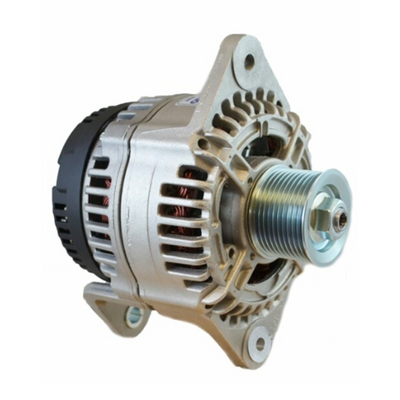
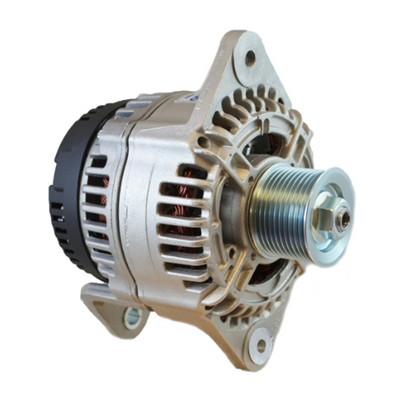
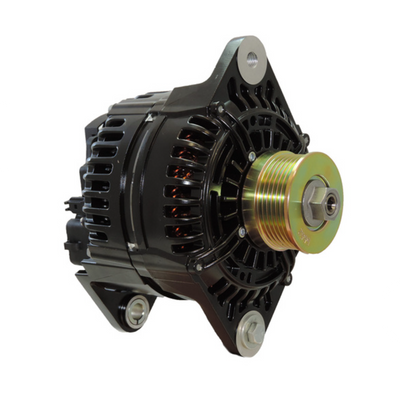
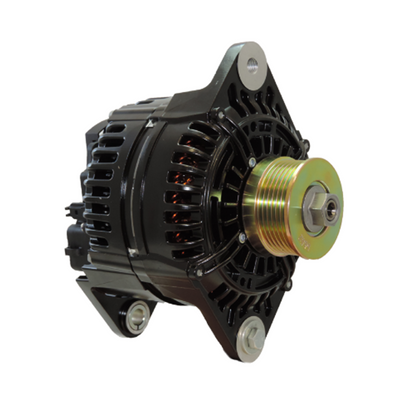
Balmar's 9 Series are large-case, heavy-duty alternators built for extended duty cycles on large diesel engines. The range covers 12V, 24V and 48V systems up to 240A, with isolated-ground options for marine installations. They are designed for vessels with large diesel engines and extensive house battery loads, where sustained high output is essential. Paired with a multi-stage regulator, they keep large battery banks charged through long, demanding operating hours.




Compare products
Balmar 9 Series Alternators FAQs
The Balmar 9-Series is a range of large and extra-large case heavy-duty alternators, covering outputs from 60A to 240A across 12V, 24V and 48V systems. Our range includes the 96-Series, designed specifically for 48V battery banks, and the 97XD and 97EHD-Series, built for large marine and commercial diesel engines supplying extensive house battery loads. Every 9-Series alternator uses a 4" dual-foot (J-180 style) saddle mount and is designed for extended duty cycles where a standard or small-case alternator would struggle.
The 96-Series is a dedicated 48V alternator for boats and systems running 48V lithium battery banks and inverters. It’s available in 60A and 100A versions, delivering 2.9kW and 4.8kW of charging power respectively, making it well suited to high-demand loads such as DC air conditioning, electric cooking and large inverter systems that would stretch a 12V setup beyond practical limits. The 96-Series also starts charging at low engine speeds (1,325 RPM for the 60A model and 2,200 RPM for the 100A), so it produces useful power without complex pulley arrangements.
The 97XD and 97EHD-Series are extra-large case alternators designed for big diesel engines such as Caterpillar, Cummins, MTU and John Deere, where a vessel or industrial installation needs to support a large house battery bank. Both are built for extended, heavy duty-cycle operation. The 97XD-Series uses Balmar’s braided-stator technology to produce strong output at low RPM. Additionally, the 97EHD-Series offers a choice of case or isolated ground. Our range covers 120A and 190A at 24V, and 240A at 12V.
Yes, every 9-Series alternator requires an external voltage regulator, as none have a built-in regulator. The 96-Series is designed to work with the Balmar MC-620 multi-stage regulator, which is powered from a 12V supply rather than the 48V system it controls. When charging lithium batteries, the MC-620 needs both the alternator and battery temperature sensors fitted, and it will stop charging when battery temperature drops to 0°C or below to protect the cells. The 97-Series alternators are designed to pair with Balmar’s multi-stage regulators for full control over bulk, absorption and float charging.
A case-ground alternator uses its metal housing as the negative return path, while an isolated-ground alternator has a dedicated negative terminal and is electrically separated from the engine block. Isolated ground is often preferred on boats because it keeps charging current off the engine block, reducing the risk of stray-current corrosion and lowering electrical noise. That’s why our 96-Series range is offered in both case-ground and isolated-ground versions, and most 97-Series models come with isolated ground terminations as standard.
The maximum alternator speed differs across the 9-Series, so it’s important to check your pulley ratio before installation. The 96-Series is rated to a maximum of 12,000 RPM, while the 97XD and 97EHD-Series have a lower maximum of 8,000 RPM, reflecting their larger case size and heavy-duty construction. Because large diesel engines typically run at lower speeds, the 97-Series’ strong low-RPM output means you can usually achieve high charging current without overdriving the alternator. Our technical team can help you calculate the right pulley ratio for your engine.